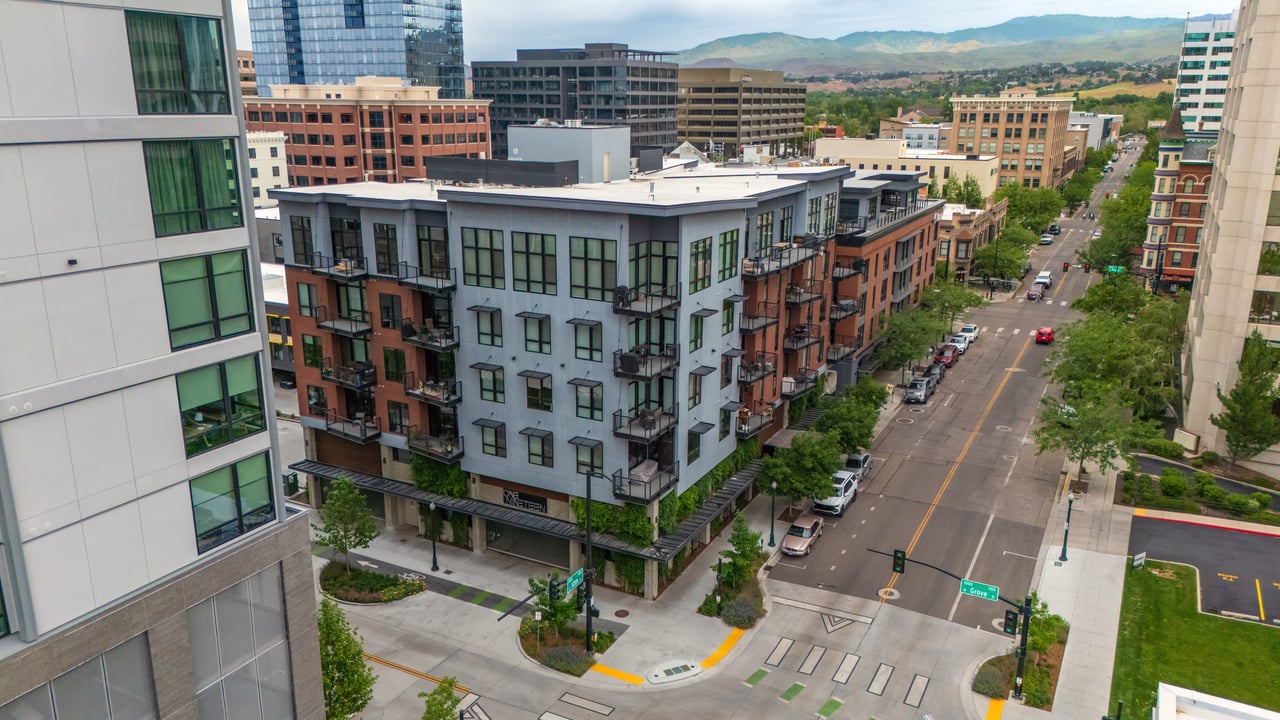
Boise’s urban housing market is a collection of small, distinct segments rather than a smaller version of the broader housing market. Downtown condominiums, historic lofts, mixed-use projects, close-in townhomes, larger residences, and lower-maintenance communities may serve different buyers and respond differently to the same conditions.
Even two units within one building may not compete directly when floor plan, view, parking, outdoor space, condition, or ownership rights differ. Citywide statistics provide useful context, but building-level evidence and longer observation periods often explain more.
One City, Many Small Markets
Real estate headlines tend to describe Boise as one market. In practice, activity varies by location, property type, price range, condition, and likely buyer. A downtown condominium does not necessarily move with a suburban single-family home, and a historic loft may attract a different audience from a newer building with secured parking and amenities.
These differences carry more weight because urban housing represents a relatively narrow portion of local activity. Small samples can sharply move averages and medians, while broad trends may obscure what is happening in a specific building or buyer segment.
Each building also has its own supply, reputation, association, services, operating costs, and sales history. A sale in one may offer limited guidance for another. Within the same property, floor level, orientation, outdoor space, renovations, storage, and parking rights can materially affect demand.
Because transactions may be limited, analysis often extends beyond the latest month or quarter. Prior sales, competing listings, withdrawn or expired offerings when available, changes in condition, and the circumstances surrounding each transaction help establish a more reliable comparison.
Inventory and Buyer Demand
A group of active listings can create the appearance of choice without offering several true alternatives. One unit may be in a high-service building with substantial dues. Another may be in a smaller association with fewer amenities. A third may lack required parking, storage, rental flexibility, or outdoor space.
For buyers, meaningful inventory is the set of properties that can reasonably substitute for one another. For sellers, the relevant competition is not every condominium on the market, but the alternatives likely to attract the same audience.
That audience may include downsizers seeking less maintenance, professionals who value proximity and time, second-home owners, frequent travelers, and investors focused on rental policy and future demand. These groups overlap, but they do not value every building equally. Demand becomes clearer when tied to the specific residence, location, and ownership structure.
How New Development Changes the Market
New development changes more than the number of homes available. It can influence expectations for design, finishes, amenities, parking, energy performance, and price.
A new project does not automatically compete with every existing building. It may introduce a different price point or attract a different buyer, while established properties retain advantages in location, residence size, views, operating history, or relative cost.
Development can also affect surrounding residences through construction, altered views, new commercial uses, increased activity, or area improvements. Distinguish proposed, approved, and actively constructed projects because their timing and impact differ.
Association Condition and Market Position
A condominium association affects the property’s market position. Buyers and lenders may consider reserves, insurance, dues, assessments, maintenance, litigation, rental concentration, owner occupancy, and planned projects. These factors can affect financing, carrying costs, confidence, and the size of the available buyer pool.
Don't reduce association condition to dues or reserves alone. Higher dues may support more services or stronger capital planning. A special assessment may fund necessary work that improves the property. Lower costs may be attractive while providing limited preparation for future needs.
The market comparison is therefore between ownership structures and residences. What the association maintains, how it is funded, and how those choices compare with competing buildings can influence both demand and value.
Reading Price and Sales Data
Urban housing data is most useful when the properties included are genuinely comparable. Price per square foot may not capture views, parking, storage, outdoor space, floor plan efficiency, building services, renovations, or association condition.
Median price can change because a different mix of buildings or unit sizes sold, even when individual values were relatively stable. Days on market may reflect pricing strategy, condition, seasonality, or a narrow buyer pool. A single sale can be important without establishing a trend, while a lack of recent sales may reflect limited supply rather than weak demand.
Useful analysis identifies which properties shaped the numbers, what the evidence supports, and where comparisons become less reliable.
Using Market Context
Buyers can use market context to identify which properties truly compete, where scarcity is meaningful, and which differences are reflected in price. Sellers can use the same evidence to position a residence within its building and against the alternatives most likely to attract the same buyer.
For both, building history, association condition, parking, storage, views, renovations, and ownership experience may matter more than a broad citywide headline. Boise may be one city, but its urban market contains many buildings and buyer groups. Understanding which part of that market a property belongs to is the foundation for accurate interpretation.