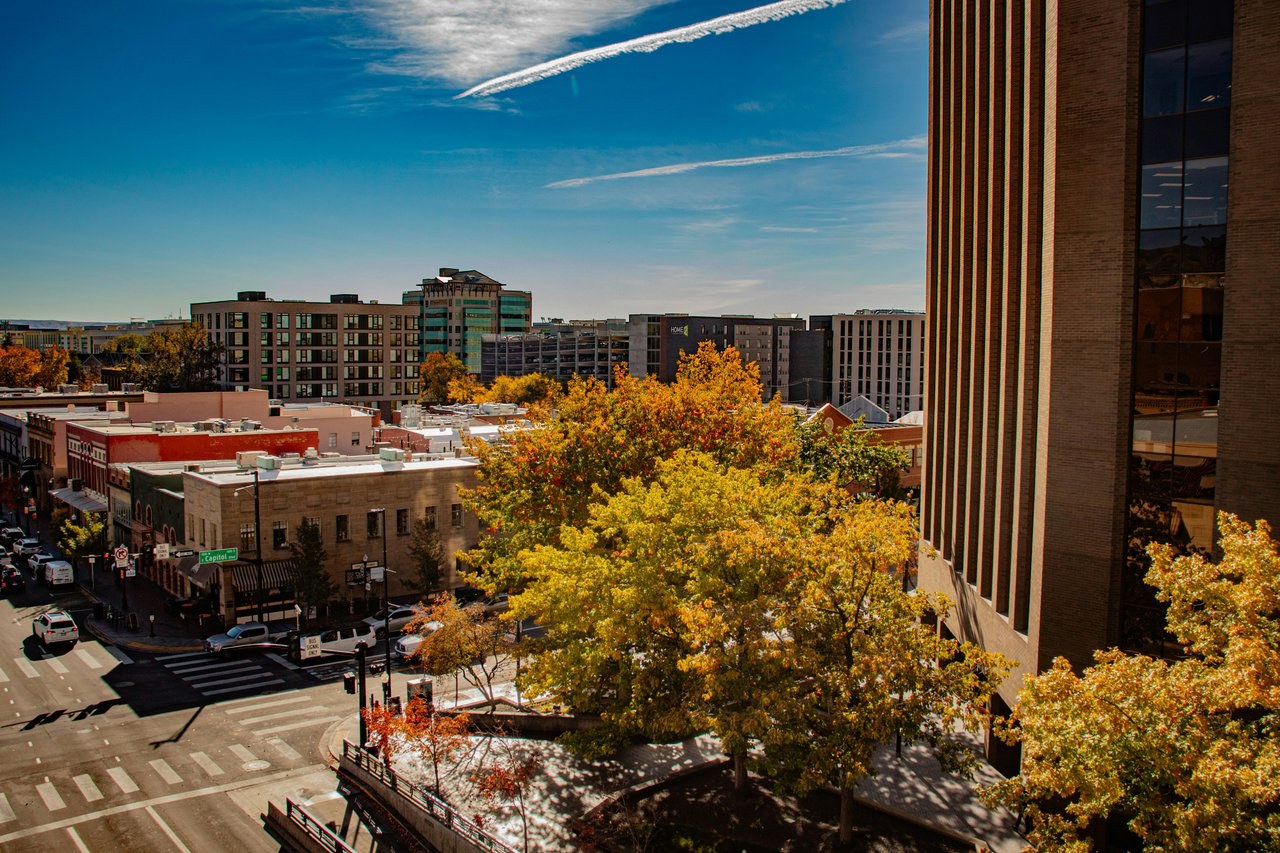
Downtown Boise has evolved into one of the city’s most distinctive places to live. It remains the center of business, dining, culture, and events, but it is also an established residential neighborhood where homes, recreation, and everyday routines overlap.
For many first-time visitors, the surprise is not the skyline or the number of restaurants. It is how approachable the center of the city feels. Blocks are compact, the river and parks are close, and an evening can move from dinner to a walk or event without returning to the car.
That ease defines downtown life. So is the variation within it. A few blocks can change the level of activity, access to the Greenbelt, views, parking, sunlight, and exposure to future development. Downtown is connected, but it is not uniform.
What Daily Life Feels Like
A morning coffee can become a walk through the neighborhood. Lunch might mean meeting someone a few blocks away. After work, residents can head toward the Foothills for a hike or mountain bike ride, continue south to the Greenbelt, or stay downtown.
The Boise River Greenbelt extends that routine beyond the city center. It connects downtown with parks, neighborhoods, Garden City, breweries, wineries, and other gathering places. For cyclists and runners, the route is not merely transportation; it often becomes part of the outing itself.
Residents describe the benefit in different ways. Some appreciate the spontaneity of meeting friends without coordinating multiple cars and parking stops. Others value time: fewer separate trips, a shorter commute to work, or a home base that is easy to leave when traveling. Downtown does not eliminate driving, but it can make the car less responsible for organizing the day.
An Approachable City Center
People arriving from larger metropolitan areas often expect Downtown Boise to behave like a more complicated city center. Instead, many find that they can take a rideshare downtown, move between several destinations on foot, and rarely need another ride until they leave.
That accessibility reaches beyond restaurants and entertainment. Offices, shops, services, parks, cultural venues, and public spaces sit within a relatively compact area. The result is less about achieving a perfectly car-free lifestyle and more about having a useful range of choices.
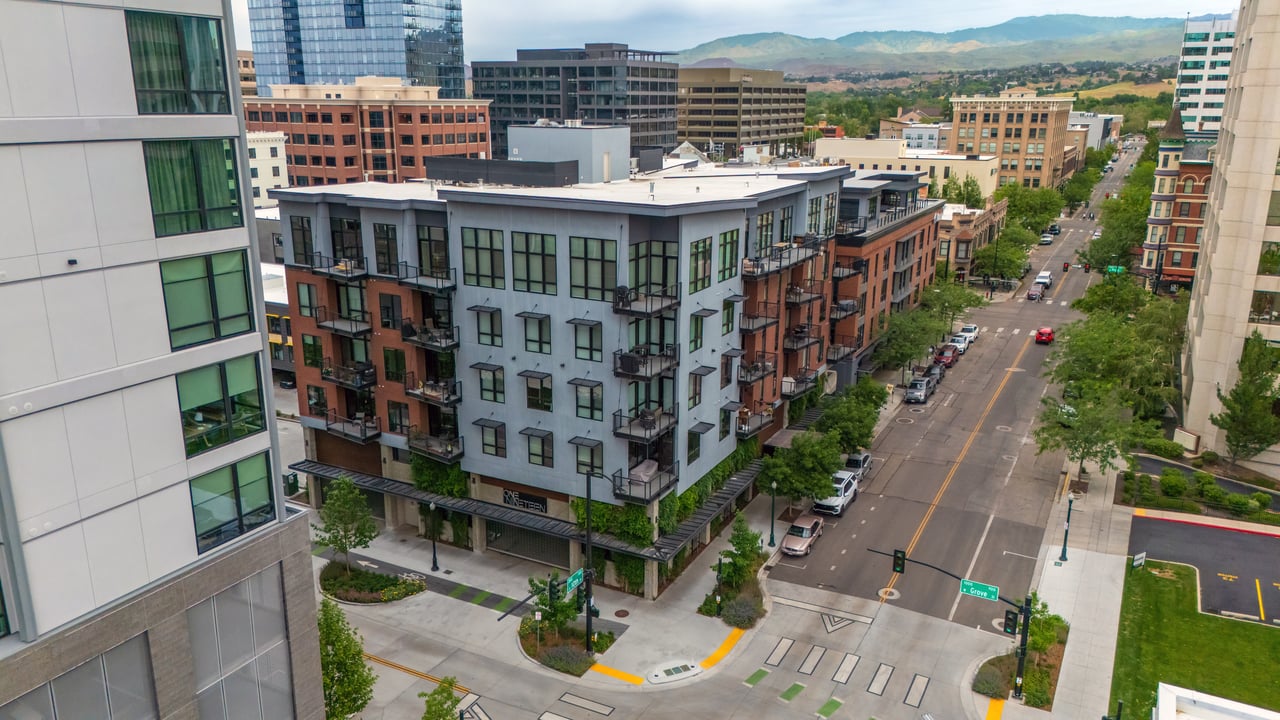
Still, the experience changes from block to block. A residence near Grove Plaza or an entertainment corridor will feel more connected to events and evening activity. A property near the edge of the core may be quieter while remaining walkable to many of the same destinations. Access to Boise State University, Julia Davis Park, the Capitol, the Greenbelt, and routes out of downtown also differ from one location to another.
Housing in an Evolving Neighborhood
Downtown’s housing has grown alongside the city. Historic loft conversions, contemporary condominium buildings, luxury residences, and mixed-use developments now support full-time residents, professionals, downsizers, second-home owners, and people who split their time between Boise and other places.
Gem Noble Lofts and the Veltex Building reflect the character of adapted downtown buildings, while One Nineteen or The Travis represent newer residential development. Royal Plaza, Tower Plaza, The Jefferson, and other properties add different combinations of scale, services, views, parking, and association structure.
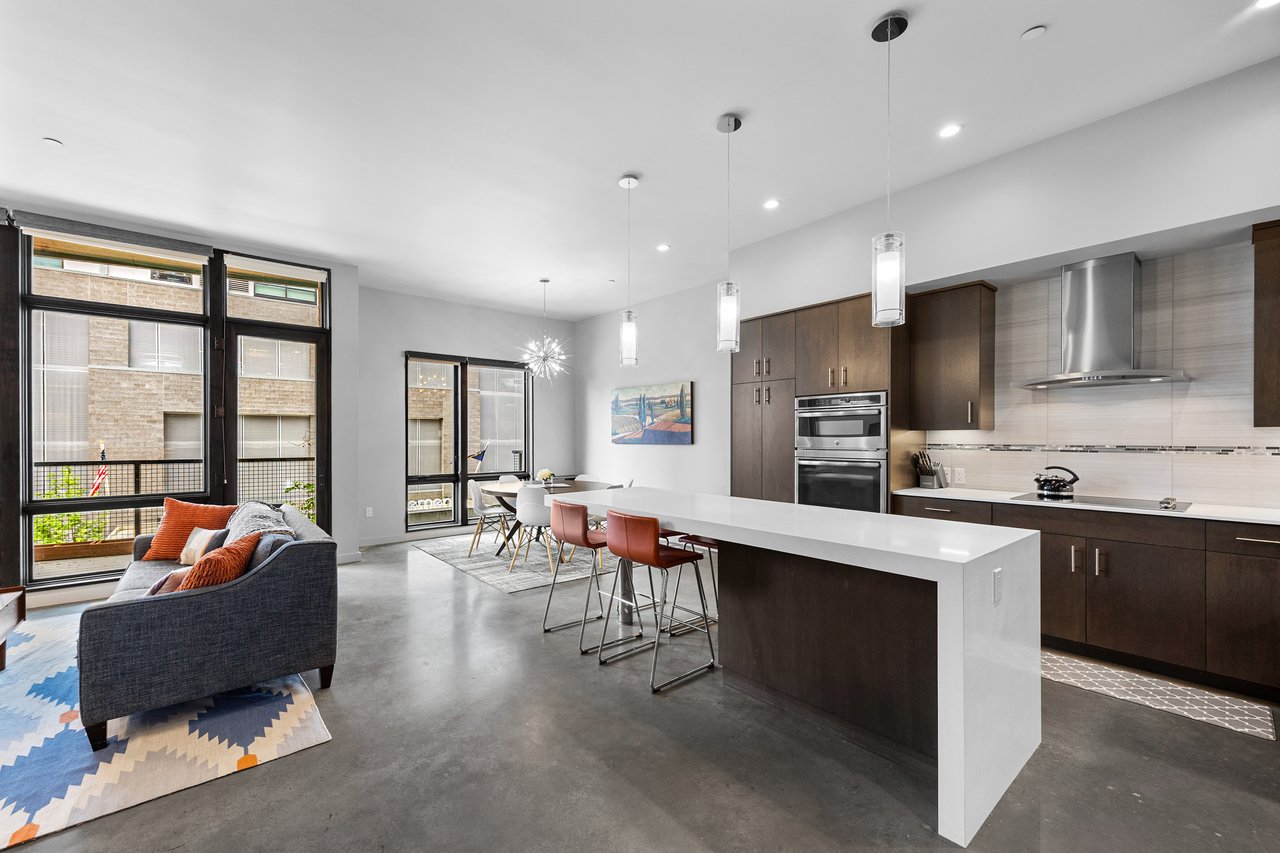
These are not interchangeable versions of a downtown condo. A historic conversion may emphasize architecture and street proximity. A newer building may offer contemporary systems, secured parking, and private outdoor space. Larger or higher-service properties can provide more amenities while carrying different dues and operating responsibilities.
A Neighborhood That Continues to Mature
The food and cultural scene has expanded as downtown’s residential growth has increased. Locally owned restaurants, cafés, wine bars, breweries, galleries, theaters, markets, and seasonal events provide activity throughout the day and into the evening.
As downtown continues to evolve and grow, new residential projects, infill, and commercial development can add homes and services while also affecting construction activity, traffic, and views. Proposed, approved, and active projects deserve separate consideration; each carries a different level of certainty and a different timeline.
Choosing a Downtown Property
Start with a scene, not a label. Imagine a normal weekday, an event night, a winter evening, and a summer weekend. Which destinations become easier to use? What activity reaches the residence? How does someone arrive, park, receive guests, store a bicycle, or leave town
Visiting at different times helps answer some of those questions. The building documents, association finances, and development context answer others.
Downtown living is not designed to maximize private land or separation. Its value comes from access: to the city, recreation, other people, and a routine with fewer barriers between destinations. The right property is the one whose block, building, and residence deliver that access in a form the owner will actually enjoy.